On Loneliness
An autobiographical exploration of Hermann Hesse’s 1927 novel Steppenwolf.
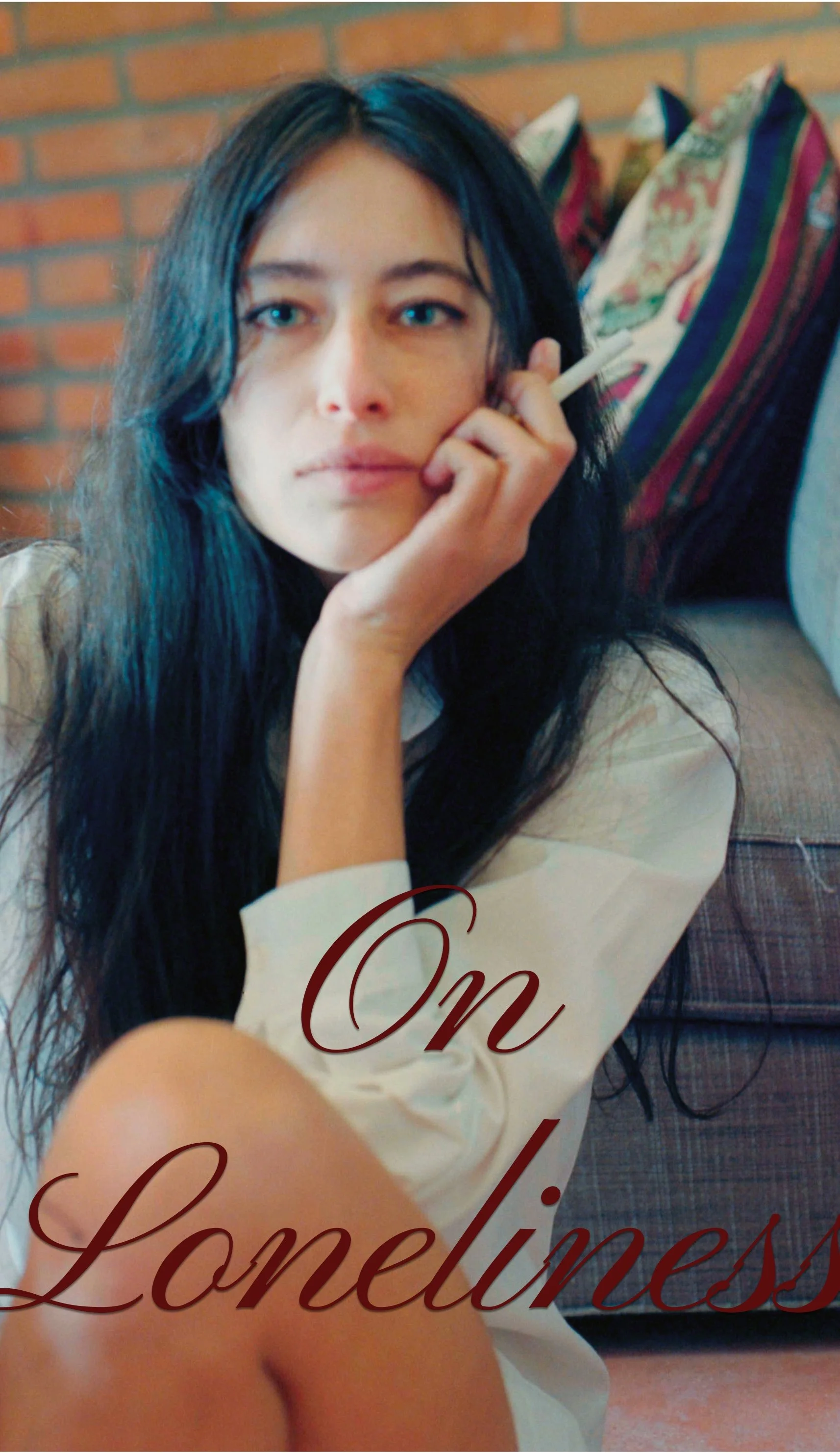
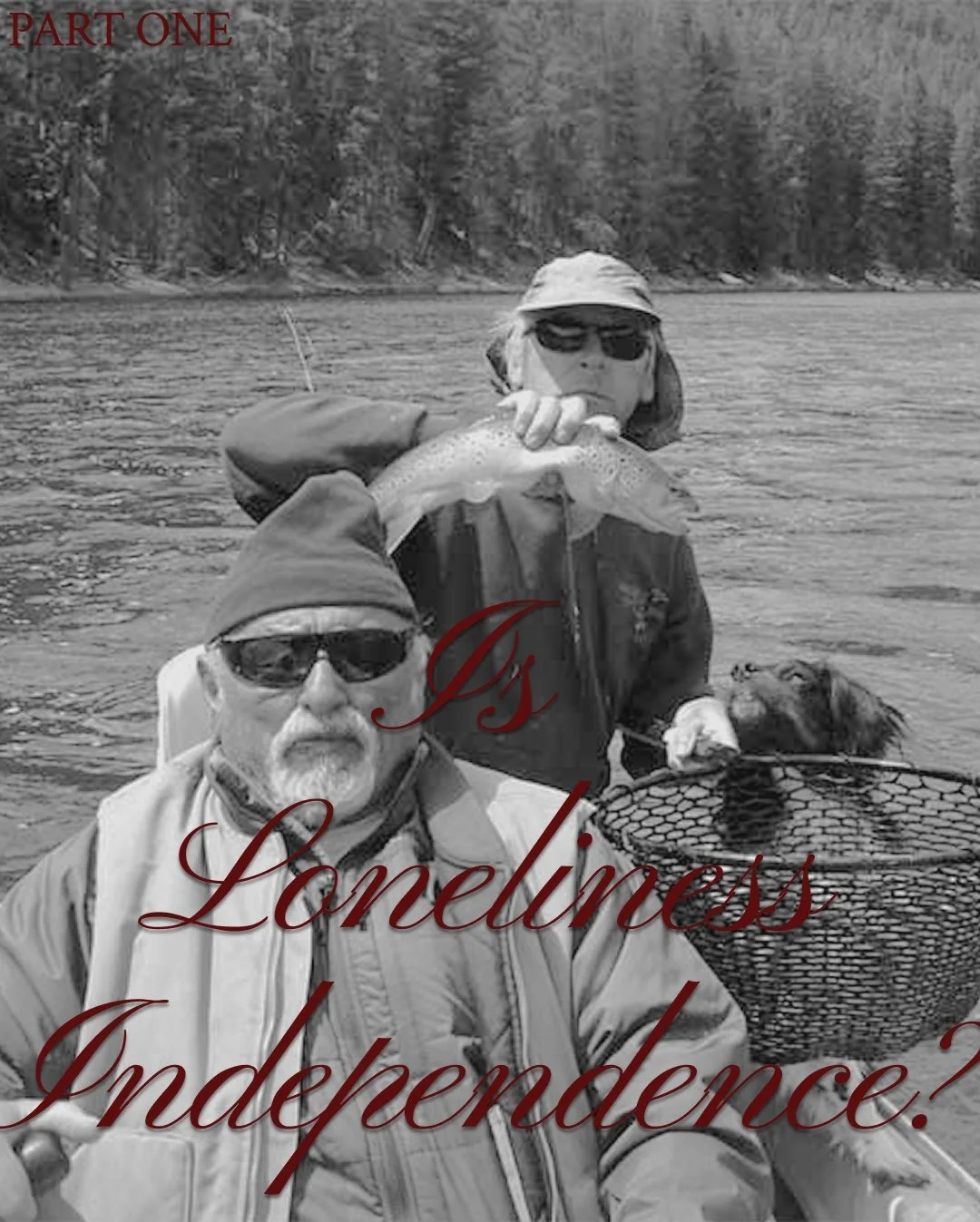
I had the feeling, upon waking from a dream that hasn’t left me in the years since, that someone had just fled the room. In my ears, the poet Jim Harrison’s words were still ringing: More than you recognize, you are alone. Many people come to this life with friends, but you came alone.
I woke with a gasp, a sweat, and the wake of this strange presence, the way after a door slams, the air rushes to fill the space again. Mysteriously, I was alone. Even more mysteriously, I didn’t know who Jim Harrison was, this figure with a weathered face and a fisherman’s cap. I didn’t know that Jim Harrison was a poet, or that his prose was beloved in France, a place where I didn’t know I’d soon live.
As far as I knew, my existence was like the adobe cottage in which I woke, surrounded by the Sonoran Desert: everything where I could see it. A tiny enclosure called a life, where one looked out onto great expanses as bright and intriguing as they are untouchable.
There I was, perspiring in isolation. But where was my life? It was happening within me, surely, but that felt incomplete. It’s as though there was the life that was mine, my life, and another parallel life of what could be. And though it was as hard to describe that other life as it was for Platonic idealists to describe the world of forms, there was one thing I knew: in it, I was not alone.
Well, anyway. This was the world I was in. And since I was sheltered away, doomed to a primarily internal existence, it was reading, that long immersion in another’s consciousness, that answered my need for closeness. Paradoxically, it was certain dead poets and writers, a group which Jim Harrison was soon to join, who seemed more alive than living acquaintances forever laughing on the other side of the glass. It was dead minds who, like personal gods, resurrected out of the murky unknown and lay themselves open before me, by the spine, always when I needed them most.
I needed, too, Hermann Hesse, and especially his novel Steppenwolf, in which the namesake protagonist and autobiographical stand-in Harry Haller, who calls himself Steppenwolf, laments his loneliness as a burden and a necessity. Once a romanticized indulgence, his loneliness burdens him to the point of suicidal ideation, then a plan to be carried out by a not-so-accidental slip of a razor on his fiftieth birthday. Like mine those years ago, his is a loneliness sheltered by literature and high-browdedness, but also of another kind, the repression of his physical experience, which seems all the more wild in relation to the majority of humanity, who are reduced in his mind to flat politeness. And so he is a lone wolf wandering the peripheral steppes of society, his intellect and sensuality at raging odds, his distinct individuality both a source of pride and potentially fatal depression. Consider it an elemental litmus test for one’s philosophy: if it makes you want to kill yourself, it’s worth revising.
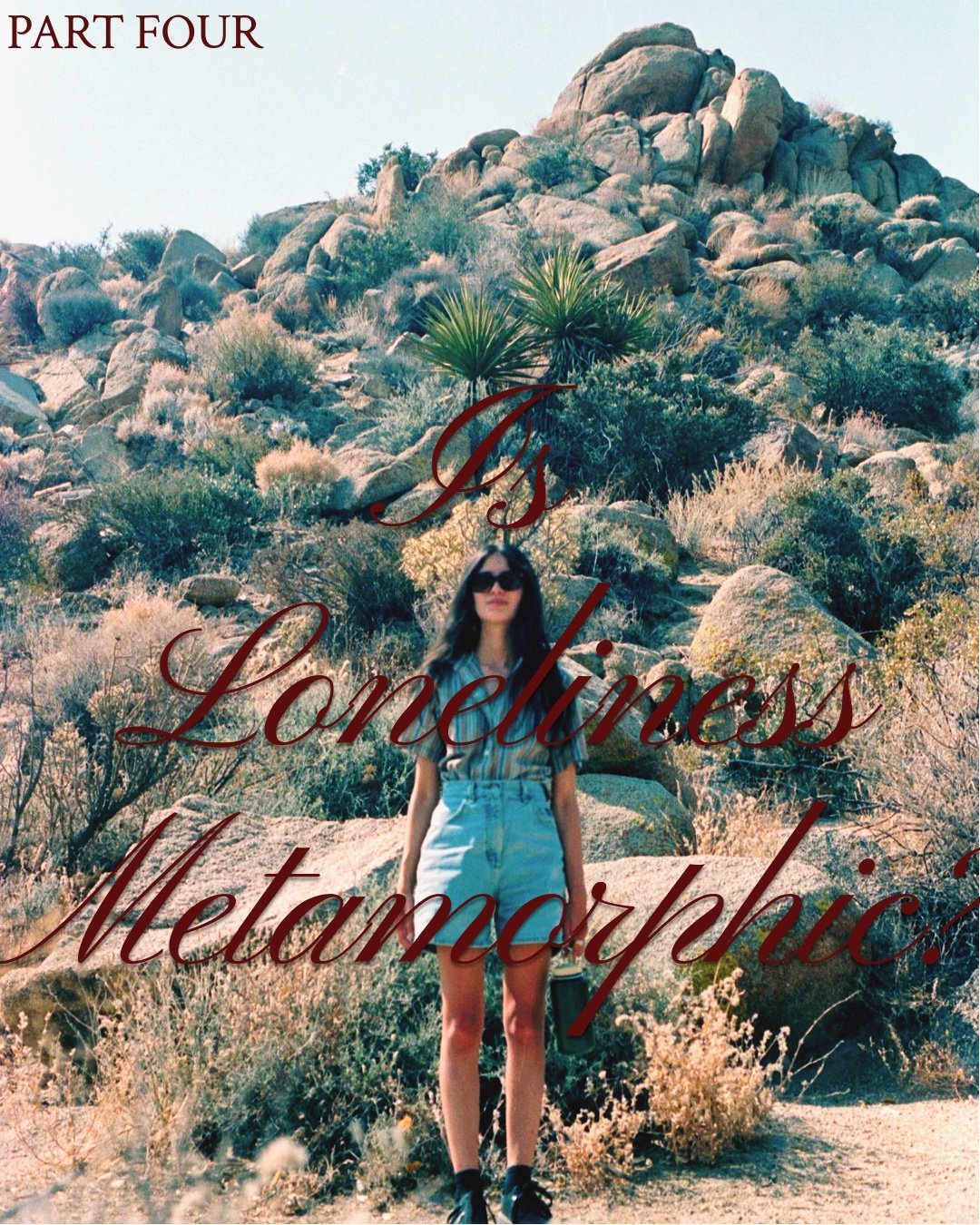
My dream still with me, I stood and pulled back the accordion blind to the stark afternoon light of Tucson, Arizona, where the dirt waved with heat, nearly hissed in the sun. The landscape was already surreal enough that the closeness of sleep didn’t heighten but harmonized with it, the sandblown porch which gave way to saguaro cacti, their arms held alert as they climbed to craggy hills, which in turn rose to burning sunsets.
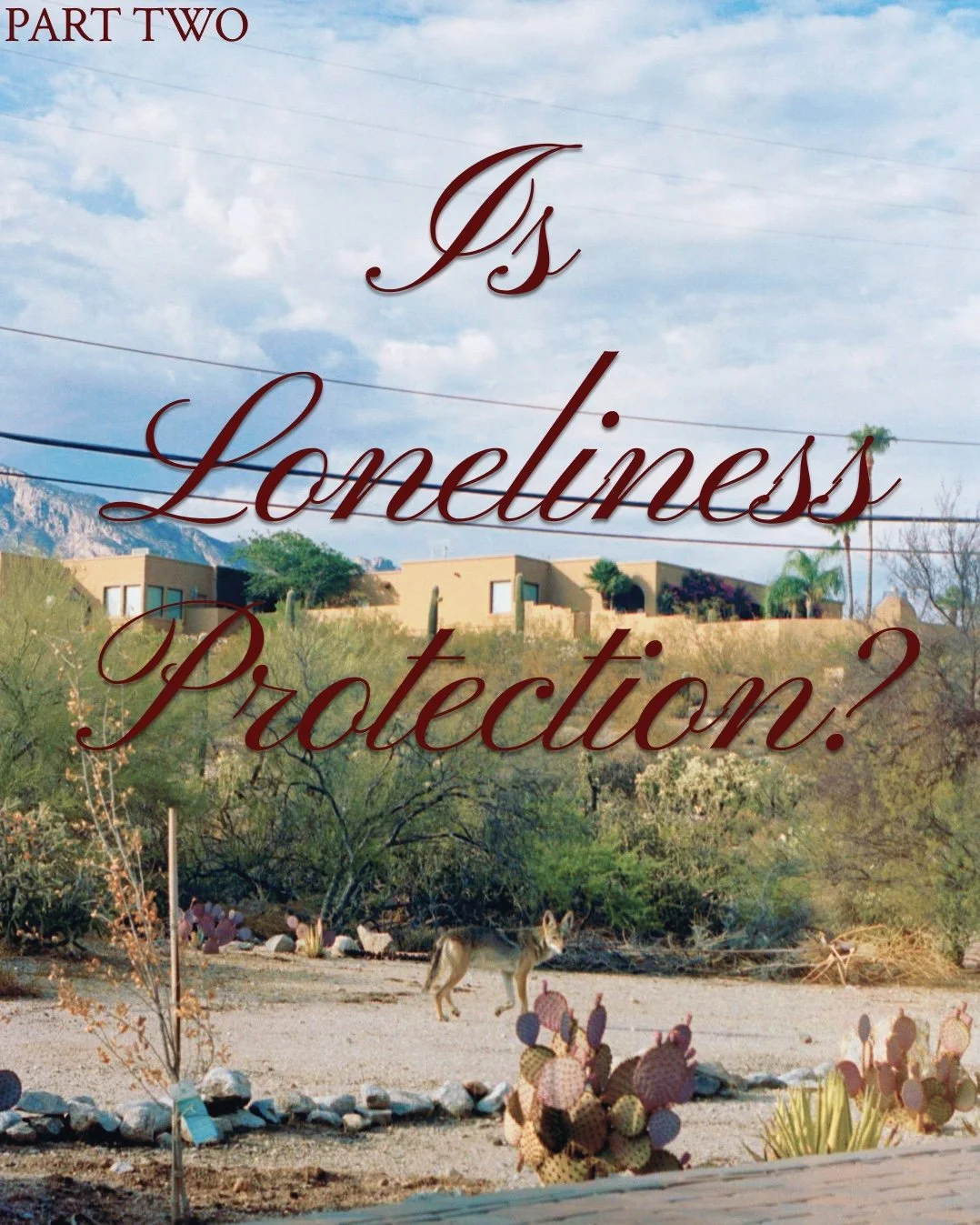
Dirt, cacti, hills, sky. That was just the broad strokes, an idea that is particularly dangerous in the desert, which to the inattentive eye can seem barren, the few species that do survive there spiked and foreboding. So is the enigma of the terrain, and part of its inexplicable beauty: the same ground cracked with dryness teemed with fertility. Life was hazardous yet rampant, fueled by its desire to persist. Javelinas slunk silent through the night, wary of the mountain lion who emerges from the brush. Pack rats shivered in burrows as rattlesnakes slid their stomachs above. Rabbits chewed with their mouths open and ears antennaed, and when they disappeared from sight I knew the coyotes had returned.
The coyotes, whose physicality never quite supplanted their myth in my eyes. They roamed freely and frequented the abandoned horse corral outside my door, no doubt drawn by these rabbits, who were in turn drawn in by stacks of residual hay. With a brief intermission at midday when the coyotes disappeared to their den somewhere in the hills, their watchful eyes and panting mouths dripping mischief were ever-present, breaking only when necks snapped back into howls. Wild and unruly, fucking in broad daylight, hunting under the moon, dogpiled in the morning, they were antithetical to solitude.
And then there was me, checking that their cubs weren’t sleeping on the front mat before opening the door and stumbling onto the porch with my morning coffee, my books of poetry, my longing. And there was the person I lived with, who made art without words and used few in conversation, and his companionship at that exact time, in those exact circumstances, through no fault of his own, was loneliness itself.
You are alone. You came alone. That summer in Tucson was the hottest and driest yet on record. When the sun began to sink below the cacti-studded scape along with its inhabitable heat, I sat on the porch and thought of what Jim Harrison said to me. The words leveled a pang, yes, but something else, too… something like comfort. What else is there to do, when you feel yourself on the outskirts of society, but to romanticize your nonparticipation? I understood this lived feeling of solitude as Steppenwolf does:
Solitude is independence. For years I had wished for it, and now it was mine. My solitude was cold, there was no denying that, but it was also serene, wonderfully serene and vast like the cold serene space in which the stars revolve.
There I was, in my cold serene space, with nobody to come between me and my thoughts. Isn’t distance from others, their way of seeing the world, and their way of moving through their allotted years, isn’t that a prerequisite for independence? If it was a mainstream worldview that shaped me, surely I’d be living a different life. Loneliness, on the other hand, was an opportunity to get to know myself, to develop a sense of what I believe in, without wearing down to external influence. Wasn’t this the very essence of independence? Where else would the poetry I wrote, a form which in its purest state has little commercial value—where else would the poems have come from?
Wanting most of all to get to the real depths and possibilities of my own existence, without outside pressure, I had shut out most of the world at a low, barely-noticeable frequency since childhood. And yet, my loneliness had its own razor’s edge, so to speak, which was that the world around me had shut its doors. Much like Steppenwolf senses, upon returning from his lonely walks to a room of cigar butts, overturned wine bottles, and piles of books, his still life of anguish:
The same thing happened to him as to everyone. The thing he most compulsively desired, most stubbornly searched and strove for, was granted to him, but more abundantly than is good for a human being. Initially all he dreams of and wished for, it later became his bitter lot. Those who live for power are destroyed by power, those who live for money by money; service is the ruin of the servile, pleasure the ruin of the pleasure-seeker. Thus it was Steppenwolf’s independence that proved his downfall… nobody was able or willing to share his life. He was now breathing the air that the lonely breathe, living in an atmosphere that was still, adrift from the world around him.
Yes, I knew that stillness, that drift, felt it sitting on the porch for hours as the sun diminished, the sky erupted, the stars came out. And then the nocturnal animals woke and the sound of rustling all around me began. Owls, nighthawks, poorwills, bats, ringtails, javelina. I could not see them, but by the sound of it, they were there. Because the air was not actually still, and I was not alone, after all.
No, I wasn’t alone. I remembered how one night, standing inside my single-room adobe house of wine bottles and books, I turned on the porch light at the same moment, by chance, that a bobcat shot across the other side of the glass door. How it paused in its crouch, lifted its head to look at me with hard eyes. How I stood inside, looking back out at it. I was the only one surprised. I was the only one who didn’t know the other lived there. It was the only time I saw a bobcat that summer. But somewhere in hiding, somewhere very close by, many, many times, it saw me.
Is solitude and its consequence, independence, ever possible, when life is constantly emerging on all sides? Is there really serenity in this chaos? Or are the illusions of solitude bound to crack like the ground of the Sonoran desert, dry and desiccated?
So were my thoughts, sitting not-so-alone-after-all, on the porch. And then the coyotes let out a chilling howl, one starting and the others joining in, commemorating the beginning of their nightly hunt, the sound always closer than I anticipated in the dark. My ruminations interrupted, my body alert, I went inside, toward the light, the cold solitude of the house.
I knew solitude was protection even as I courted its extremes for years, my steps toward a lonely life in the Sonoran desert sometimes subtle, sometimes keenly self-aware in their significance, all toward this circumstance that was on one hand wholly new, and on the other uncannily familiar: on the edge of the low deserts in California’s depths, I spent my childhood outside, alone, in the natural world, uninterested in human matters.
But while the natural world surrounded me and my adobe house that year, and while I would have preferred to avoid both of us, myself and the house with its unnatural frigidity, I was still human, and eventually, I had to go inside. Our species, too, is in the game of predator and prey. Other than a mountain lion or a rattlesnake, it was other humans I feared most. And if you fear others, and yet you desire to be loved, fear and love are intertwined. You are doomed to fear love, and to love those who, equally to you, are afraid.
Who’s to say we really know the ones who share our sleeping rooms and our fear? When we categorize others as predator on some level, on some level we reduce them to the threat itself. Survivalism doesn’t allow for nuance, which is why the words of Steppenwolf may feel reductive in their reference to the joys of a society from which he is self-marginalized:
How can I help being a lone wolf and disgruntled hermit, surrounded by a world, none of whose aims I share, none of whose joys appeal to me? … I can’t understand the pleasures or joys people now seek in crowded trains and hotels, in crowded cafes with their obtrusive hot-house music; in the bars and variety theaters of expensive, fashionable cities … On the other hand, what I experience in my own rare hours of joy, what invigorates, delights, uplifts me, and sends me into ecstasies, the world at large knows, looks for and loves if at all only in works of literary fiction. In real life they find it mad. And in fact, if the world at large is right, if the music in the cafes, those mass entertainments, these American-style people who are content with so little are all right, then I am wrong, I am mad.
Gazing upon the gulf between Steppenwolf’s experience and what he observes to be the desires of society, he accepts that either he is mad, or they are. The choice, then, is between two ways to disappear: either we erase the joyous yet unacceptable parts of ourselves so that we can exist in the world at large, or we erase ourselves from the world at large.
Or, we can do both. The only tenable hour to go beyond the porch before sundown was before dawn, the air as fresh as it would be that day. In the desert, alone, I could consider the infinite beauty of the aloe tree. I could converse silently with the crazed roadrunner pecking along the trail. The darkness on everything around me—the dirt, cacti, hills, and sky—lifted gradually as the sun rose to beam down astonishing heat. And then, when the dreaded moment had come, when I was covered in sweat and my water reserve more than half gone, I had to turn back, go to the house, and close the door tightly behind me, to ward off tarantulas, snakes, my unacceptable selves.
There exists an ultrafine line between the epiphanic and madness. I was somewhat out of my mind in the desert sun, speaking to plants and animals, sensing that they were speaking back, that the answer to life’s mysteries was communicated to me every step in the dirt. Steppenwolf’s journey begins when he discovers a pamphlet addressed “To Mad People Only.” For those of us who feel unacceptable, who feel mad, in a world that worships the material and the “proven,” sharing who we are can be a dangerous act. And yet, all of our personal gods, those strangers who we never met but have resonated with our deepest instincts, thought differently. At its most essential, true marginal thinking is at risk of what the pamphlet argues:
Those they declare heretics can today be burned at the stake, those deemed criminals can be hanged, only for monuments to be erected to them the day after tomorrow.
Short of future monuments, there is, of course, the greater and most likely danger: of drifting into obscurity. And isn’t that what loneliness is? To be obscured from the world at large? And yet, life is happening to you, just as much as it’s happening to anyone else. It doesn’t stop.
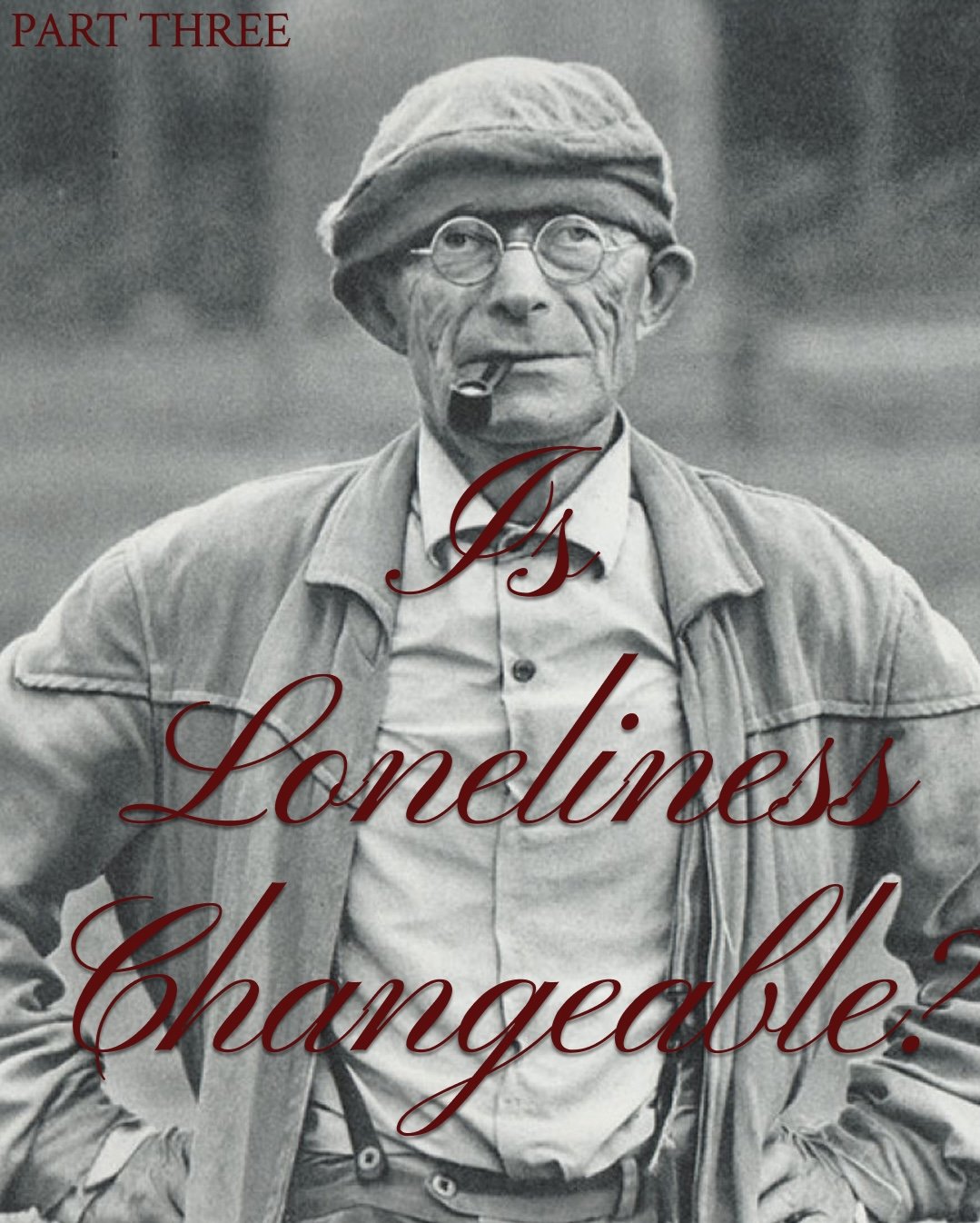
Hermann Hesse was self-admittedly an autobiographical novelist. Harry Haller shares his age, his initials, his past marriage, his political ostracization, even the scheme to delay his suicide to his fiftieth birthday. It was a time in which his loneliness had reached urgent heights, when he had “given up all aesthetic ambition,” as he writes in a letter to a critic in 1926:
I don’t write literature now but simply confessions, just as a drowning man or a man dying of poisoning no longer worries about the state of his hair or the modulation of his voice, but instead simply lets out a scream.
Eventually, despite the physical ailments tormenting him at the time, and despite spending his previous years in isolation in the Swiss countryside, bordering on Italy and asceticism, he surrenders his independence and rents a room in the city. Through exposure to that terrifying hazard for the lonely—that is, other people—he learns how to dance, buys a gramophone to play popular songs, and attends a masked ball, just like his Steppenwolf. I can imagine him, his body stiff with gout, dancing among his books and his wine bottles to music he once considered obtrusive, feeling foolish, feeling hopeful, the pretentious and the promising battling it out. Through Steppenwolf’s voice, he writes of these polar forces, thrashing him around in the chaos of his transformation as he hesitantly begins to open himself to the sensual (and yes, populated) world:
I was now often experiencing an odd mixture of the old and the new, of pain and pleasure, of fear and joy. One moment I was in heaven, the next in hell; mostly in both at once. Now the old Harry and the new would be living in bitter strife, now at peace with one another. Sometimes the old Harry seemed to be totally extinct, dead and buried, then suddenly he was on his feet again, giving orders, ruling the roost and behaving like a know-all. And the new, little, young Harry, feeling ashamed, allowed himself to be pushed into the background without a word of protest. At other times the young Harry would seize the old one by the throat and nearly throttle him. That would lead to a deal of groaning, much mortal combat and many thoughts of the dreaded razor.
Such is the painful process of moving from one identity to another, be it lone wolf to dogpiled coyote, academic to sensualist, ascetic to socialite, or any other engagement of the body, the heart, hope’s awakening. The problem with emotional protection is that it is false: mimicking a scab over the wound, it seals it off from ever healing, and eventually becomes the wound itself, which in turn must be opened, so that we might move on.
And for me, is it too late? If I am to believe my madness, to believe that Jim Harrison actually traveled the sixty miles and six years from where and when he died in Patagonia, Arizona, to where I was sleeping in Tucson, Arizona, then I’m to believe that his words were true, that I came here alone. That doesn’t, however, dictate how I will leave this life. It doesn’t preclude new relationships, new souls that mine may find again somewhere in the beyond, after we all go.
Like much of the common imagination around Steppenwolf, I have focused here on only the beginning half: Steppenwolf is solitary, self-protective, and suicidal, and decides to change. This is solely because what follows is too distinctive to decontextualize here. His transformation is what makes Hermann Hesse one of my gods, and can only be experienced in real time as he wrote it, page by page. Especially for the lonely.
In Hesse’s own postscript to the novel, fourteen years after its publication, he remarks on the phenomenon of young readers who only seemed to focus on Steppenwolf’s struggles, a mere half of the novel’s contents:
These readers were thus incapable of appreciating that the book, though it does constitute a record of suffering and misery, is by no means the book of a man despairing of life, but of one who believes… I would nevertheless be pleased if many readers could recognize that although Steppenwolf’s story is one of sickness and crisis, these do not end in death or destruction. On the contrary: they end in a cure.
Perhaps one cure to loneliness comes with the realization that no, we are not alone, within or without. Even the most remote ecosystem is teeming with wild life, those animals and plants and insects which are cycling ever onward, unasked; in the city, where loneliness can reach its peaks, we move with its rhythms, surrounded on all sides by strangers who are nonetheless our fellow man. Down to our cells, too, we are created by the encounter of two people, and it is their flesh that is regenerated in ours. We carry them and those who created them with us everywhere, and no matter the nature of our relationship, this is an inescapable act of love.
No, we are never alone. This is the very reason I am writing in a form which centers personal encounters with art. Consciously or unconsciously, every encounter with meaning, with beauty, with truth, nudges us in one direction or another as we journey on. This is a diary of those nudges, those moments of communion with the dead or alive. Someone I love recommended Steppenwolf, I read it, and I changed. None of us get out untouched. All of us are always changing, continuously covered in the fingerprints of others.
If aloneness isn’t an option, perhaps our identification with loneliness is also subject to change. And yes, there may be many false starts in intimacy for the strange. One thirsting can look up at a glimmering mirage and mistake it for an oasis. One who looks for warmth can find coldness, and one who looks for love can find a quiet imitation. But we’re not dead yet. Minds we have yet to encounter may still emerge from the murky unknown, reach out for us when we need them most.